
close
Choose Your Site
Global
Social Media
Views: 0 Author: Site Editor Publish Time: 2026-07-14 Origin: Site


A sluggish or stalling log splitter cylinder directly reduces productivity. It increases labor intensity and exhausts operators during heavy workloads. You waste precious time waiting for a slow ram to reset. Upgrading to an oversized engine is expensive and largely impractical for most users. Instead, installing a two-stage hydraulic pump for log splitter system maximizes your splitting power efficiently. This component gives you rapid speed when unloaded and immense force when hitting resistance.
Selecting the correct replacement hydraulic pump requires carefully balancing engine horsepower, fluid flow, and operational speeds. Proper matching ensures safe, fast cycle times. You will discover how to calculate your power needs correctly in this guide. We also explore RPM matching rules and how to avoid common hardware mismatches.
Two-Stage Efficiency: Hi/Lo pumps provide fast cylinder extension at low pressure, then automatically shift to low flow/high pressure to split tough wood, reducing cycle times.
Engine & RPM Matching: Most log splitter pumps require 3,200–3,400 RPM. Connecting them directly to a 1,650 RPM tractor PTO without a speed multiplier will result in severe underperformance.
Sizing to Power: High-flow pumps (e.g., 19 GPM) demand adequate power sources (minimum 9.5 HP); undersizing the engine leads to stalling.
Secondary Applications: While excellent for splitters, presses, and compactors, two-stage pumps are unsafe for standard tractor implements due to unpredictable speed shifting under load.
Wood processing demands conflicting mechanical forces. Operators need rapid cylinder movement to save time. They also need immense force to drive wedges through tough logs. Standard single-stage systems force you to choose between speed and power. Generating 3,000 to 4,000 PSI at high flow rates usually requires a massive, expensive engine.
The two-stage gear pump effectively solves this specific dilemma. It relies on a clever dual-gear assembly inside a single housing. An internal unloader valve directs fluid flow based on system resistance. This design allows a compact engine to perform like a heavy-duty industrial powerplant.
Stage 1 (Unloaded): The system moves large fluid volumes at low pressure. A typical pump pushes 16.5 GPM at roughly 650 PSI. The cylinder extends rapidly toward the log.
Stage 2 (Loaded): The wedge contacts the wood. Pressure spikes instantly. The unloader valve senses this resistance threshold. It shifts the system into low flow and high pressure. The pump now moves perhaps 3.6 GPM but generates over 2,500 PSI. This delivers immense crushing force.
Once the log splits, resistance drops. The unloader valve shifts back to the high-flow stage. You retract the cylinder quickly to prepare for the next round.
Many basic product catalogs overlook a vital technical benchmark. Stage 2 flow is generally 25% to 30% of the pump’s rated Stage 1 flow. If you buy a 16 GPM model, expect around 4 GPM during the actual splitting phase. Understanding this ratio helps you predict realistic cycle times accurately.
We can summarize the dramatic efficiency gains of a two-stage system compared to a single-stage alternative. The chart below illustrates estimated performance on a standard 4-inch cylinder.
Pump Type | Engine Requirement | Extension Speed | Splitting Force | Average Cycle Time |
|---|---|---|---|---|
Single-Stage (High Flow) | 20+ HP | Very Fast | High | ~8 seconds |
Single-Stage (Low Flow) | 5 HP | Very Slow | High | ~25 seconds |
Two-Stage (Hi/Lo) | 5 - 8 HP | Fast | High | ~12 seconds |
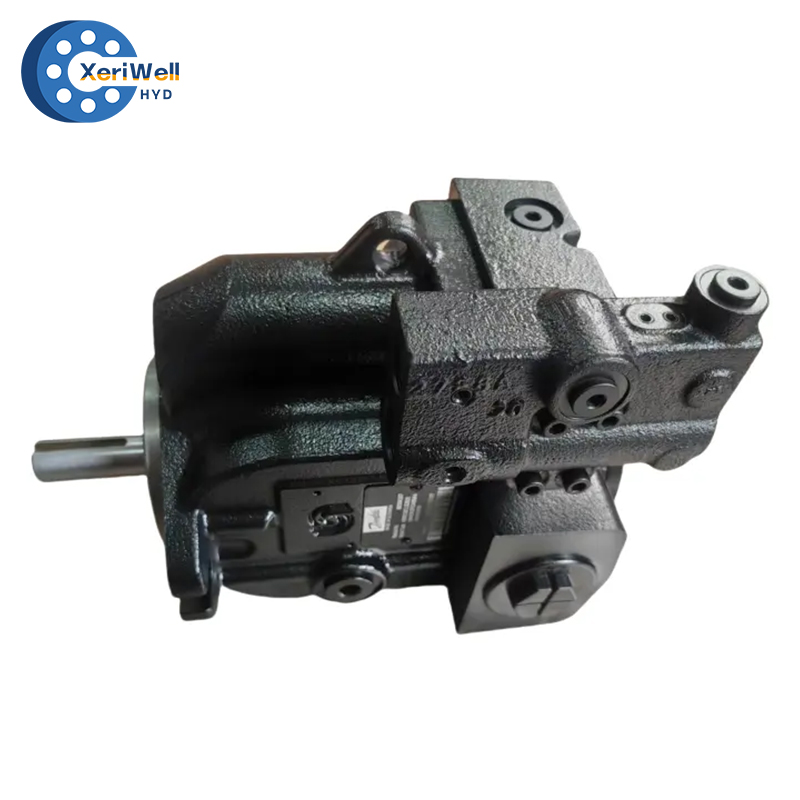
Mapping pump flow capacities to your specific needs prevents costly component failures. You cannot simply bolt the highest-capacity pump onto a small engine. The laws of fluid dynamics dictate strict horsepower requirements.
Light-duty or recreational setups usually operate between 5 and 11 GPM. These units are perfect for casual users processing firewood for winter. They require smaller 4 to 5 HP gas engines. You get reliable performance without excessive fuel consumption or noise.
Commercial heavy-duty operations demand 16 to 28 GPM flow rates. These systems are built for high-volume firewood processing. Sizing the power source correctly is critical here. A 16 GPM pump explicitly needs around 8 HP to function properly. Stepping up to a 19 GPM pump requires at least 9.5 HP.
Mainstream log splitters utilize 3,000 PSI as the industry standard for splitting force. This pressure easily handles oak, hickory, and knotted hardwoods. Some heavy-duty OEM replacements are rated up to 4,000 PSI. These extreme pressures require reinforced hoses and heavier cylinder walls to prevent explosive failures.
Upgrading to a higher GPM pump without upgrading your engine causes immediate failure. When the unloader valve shifts into the high-pressure second stage, fluid resistance spikes. A small engine lacks the necessary torque. It will stall instantly upon hitting the wood block.
Pump Flow Rating (GPM) | Minimum Engine Power (HP) | Typical Max Pressure (PSI) | Best Application |
|---|---|---|---|
11 GPM | 5 HP | 3,000 PSI | Residential / Seasonal |
13 GPM | 6.5 HP | 3,000 PSI | Farm / Moderate Duty |
16 GPM | 8 HP | 3,000 - 3,500 PSI | Commercial Entry |
22 GPM | 11+ HP | 3,500 - 4,000 PSI | Industrial Processing |
Hydraulic fluid gets incredibly hot during continuous operation. Material construction dictates how well a unit dissipates this heat. The market divides solutions into consumer-grade and industrial-grade categories.
Premium components feature heavy cast iron gear housings. Manufacturers design them for continuous, aggressive duty cycles. Cast iron maintains structural integrity under extreme heat and pressure. Professionals often seek industrial reliability akin to a heavy-duty DANFOSS Hydraulic Pump or Haldex design. These premium units resist internal wear, ensuring flow rates do not degrade over years of harsh usage.
Standard OEM replacement kits utilize lighter aluminum bodies or standard-grade cast iron. You will find these on consumer brands at major retailers like Tractor Supply, Speeco, and Huskee. They are lightweight, highly affordable, and function as easy direct swaps.
Are aluminum bodies bad? Not at all. Standard OEM-grade replacement kits offer up to 85% mechanical efficiency. High-end industrial pumps certainly last longer under daily commercial abuse. However, consumer models are perfectly sufficient for seasonal residential splitting. They easily handle typical weekend workloads.
Always maintain clean hydraulic fluid. Contaminants act like sandpaper against internal gears.
Use a suction strainer inside your fluid reservoir to catch large debris.
Install a high-quality return line filter to capture microscopic metal shavings.
Allow the fluid to warm up for a few minutes in freezing weather before splitting heavy logs.
Installation failures rarely stem from defective hardware. They usually result from RPM mismatches. Standard direct-drive splitter pumps are rated for small gas engines. These engines typically run between 3,200 and 3,400 RPM. The internal gears require this specific rotational speed to generate advertised flow rates.
Many farmers fall into the tractor PTO trap. They try connecting these pumps directly to a standard tractor power take-off shaft. A standard PTO runs at 540 RPM. Even mid-mount shafts only reach about 1,650 RPM. If you bolt a 3,600 RPM pump directly to a 540 RPM shaft, it fails to generate sufficient flow. The cylinder will barely move. You must use a pulley and belt speed increaser system for PTO setups. A gearbox multiplier is another highly effective solution.
We must issue a strong safety warning regarding equipment repurposing. Do not use a two-stage splitter pump for standard tractor attachments. They are entirely unsafe for hydraulic lifts, loaders, or mowers. When the unloader valve shifts to the high-pressure stage, fluid flow drops abruptly. This sudden drop causes dangerous, jerky movements in standard agricultural implements. You risk dropping heavy loads unexpectedly or damaging delicate structural linkages.
Buying a replacement requires careful hardware verification. You cannot guess dimensions. Use the following logic checklist to ensure your new unit fits perfectly on the first try.
Shaft Size & Keyway: Verify the physical shaft diameter. Most small engine setups use either a 1/2-inch or 5/8-inch shaft. You must match the engine coupler exactly. Measure the square keyway slot as well.
Mounting Bracket: Check the bolt pattern on your engine block. Ensure it aligns with your existing hardware. Look for comprehensive kits. These bundles include the pump bracket, bolts, and flexible Lovejoy couplers. Spider couplers absorb minor misalignments and reduce vibration.
Port Sizing: Confirm your inlet and outlet thread sizes. The inlet (suction side) usually uses a larger hose clamp fitting or a wide NPT thread. The outlet (pressure side) uses smaller NPT or O-Ring Boss (ORB) threads. Matching these prevents messy fluid leaks.
Before pulling the trigger on a purchase, inspect your current hydraulic reservoir. A common rule of thumb requires adequate fluid volume to prevent overheating. If you upgrade from an 11 GPM unit to a 16 GPM unit, your fluid cycles faster. Ensure your system can handle the increased fluid volume. A tank that is too small leads to rapid overheating and dangerous pump cavitation.
Upgrading your hydraulic system dramatically shaves down cycle times. You gain back hours of labor without buying a massive, expensive engine block. By utilizing a dual-stage design, you seamlessly blend rapid cylinder travel with crushing force.
Your main priority is accurate HP-to-GPM matching. Do not blindly purchase the highest stated flow rate. Verify your power source can handle the secondary high-pressure stage. Ensure your operating speeds sit firmly near the 3,400 RPM mark for gas engines. Double-check your shaft dimensions and thread sizes before ordering. Following these steps guarantees a smooth, powerful, and safe firewood processing experience.
A: Most manufacturers only list the Stage 1 (high flow) GPM. As a rule of thumb, the second stage (high pressure/splitting mode) produces roughly 25% to 30% of the first stage's GPM.
A: Yes. Two-stage pumps are excellent for presses, clamping units, and compactors because these applications share the same requirement: fast travel to the target, followed by slow, high-pressure force.
A: This usually means your engine HP is too low for the pump's GPM rating, or the pump's unloader valve (the mechanism that shifts it from Stage 1 to Stage 2) is malfunctioning, forcing the engine to try and push high flow at high pressure simultaneously.


